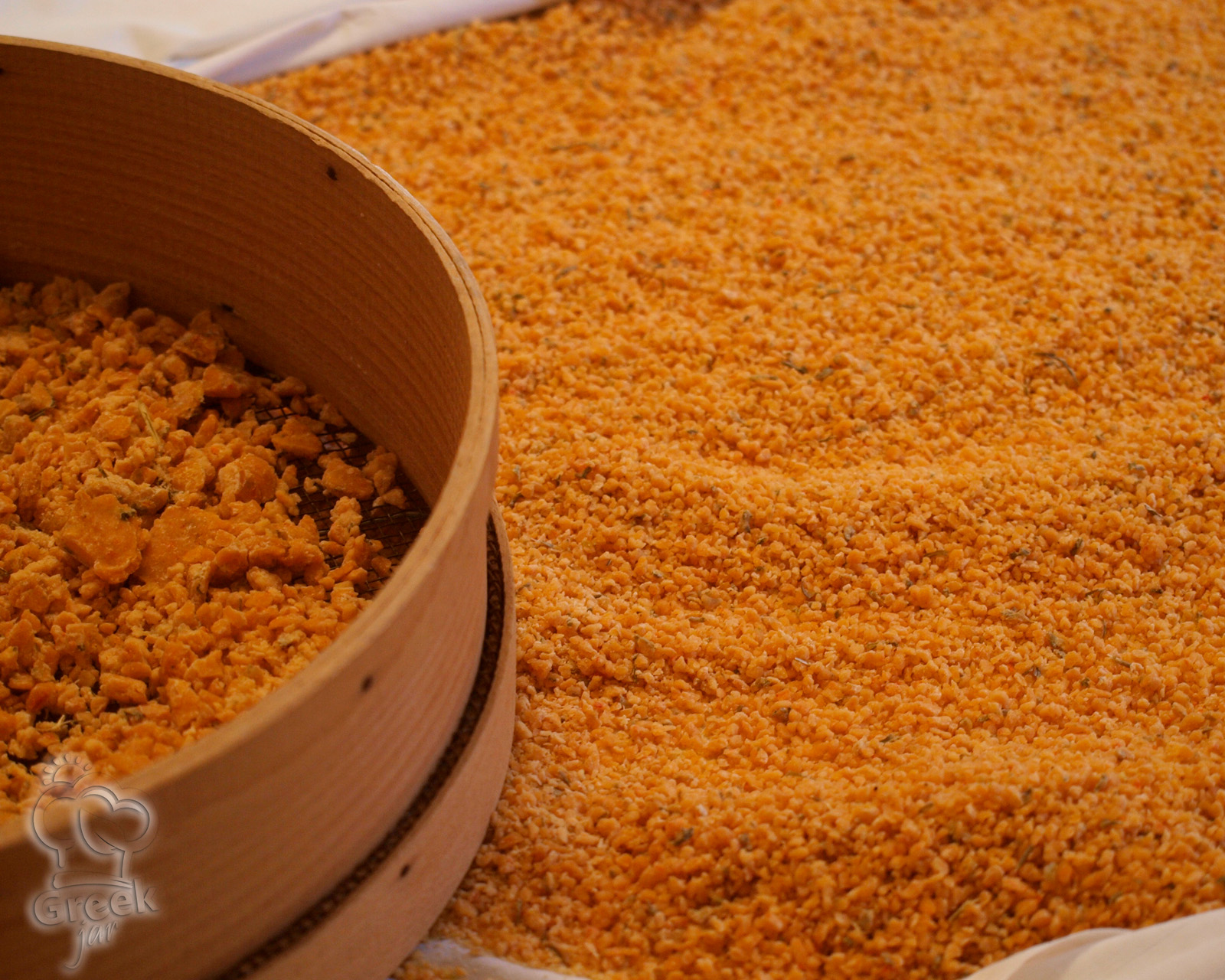
In my grandmother’s old recipe book, among the recipes she kept all those years, there is also the trahanas she made every summer, towards the end of August. It is the trahanas I remember from our little holiday house by the sea, when the scent of the trahanas herb was almost synonymous with the last days of summer and the preparations for winter.
Her recipe is for sweet trahanas, made with yogurt rather than the sour version. I have kept her recipe as it was written in her book, while adding a few more vegetables, as we prefer it today.
In the past, people did not usually add many vegetables to trahanas. Every household had its own way of making it and used whatever ingredients were available at the time. Perhaps that is what makes old recipes so special: they were never absolute. They changed slightly from one home to another, from one grandmother to another, and with them changed the flavor each family came to remember.
In our version, you can also use whatever vegetables you prefer. They do not have to be exactly the same every time; a little freedom in the kitchen is part of the tradition.
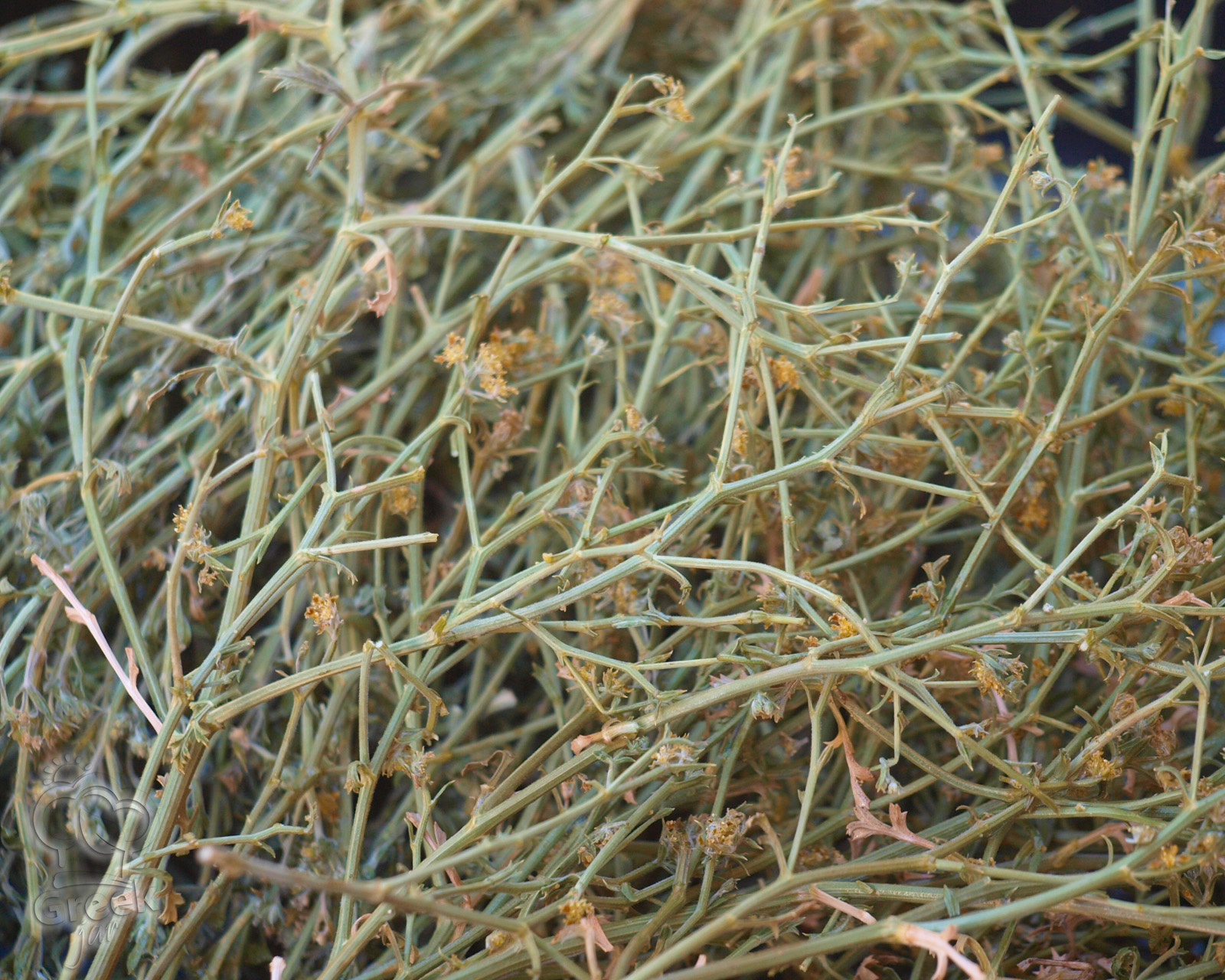
The one ingredient I would not leave out is trahanas herb. It is an aromatic plant that grows in Chios and along the coast of Asia Minor, giving trahanas its distinctive fragrance. For me, it is perhaps the scent that takes me back faster than anything else to our little holiday house and to those days when my grandmother would begin making trahanas.
Every time I open her recipe book and find this recipe, it feels as though I am opening a little window into those summers as well. And somehow, through a handful of ingredients and a little patience, a flavor that began with her continues to find its way to us today...
Medium
Total: Approx. 1 hour
5 kg of flour
Ingredients
For approximately 5 kg of flour:
- Trahanóchorto (the more, the better)
- 4–5 large onions
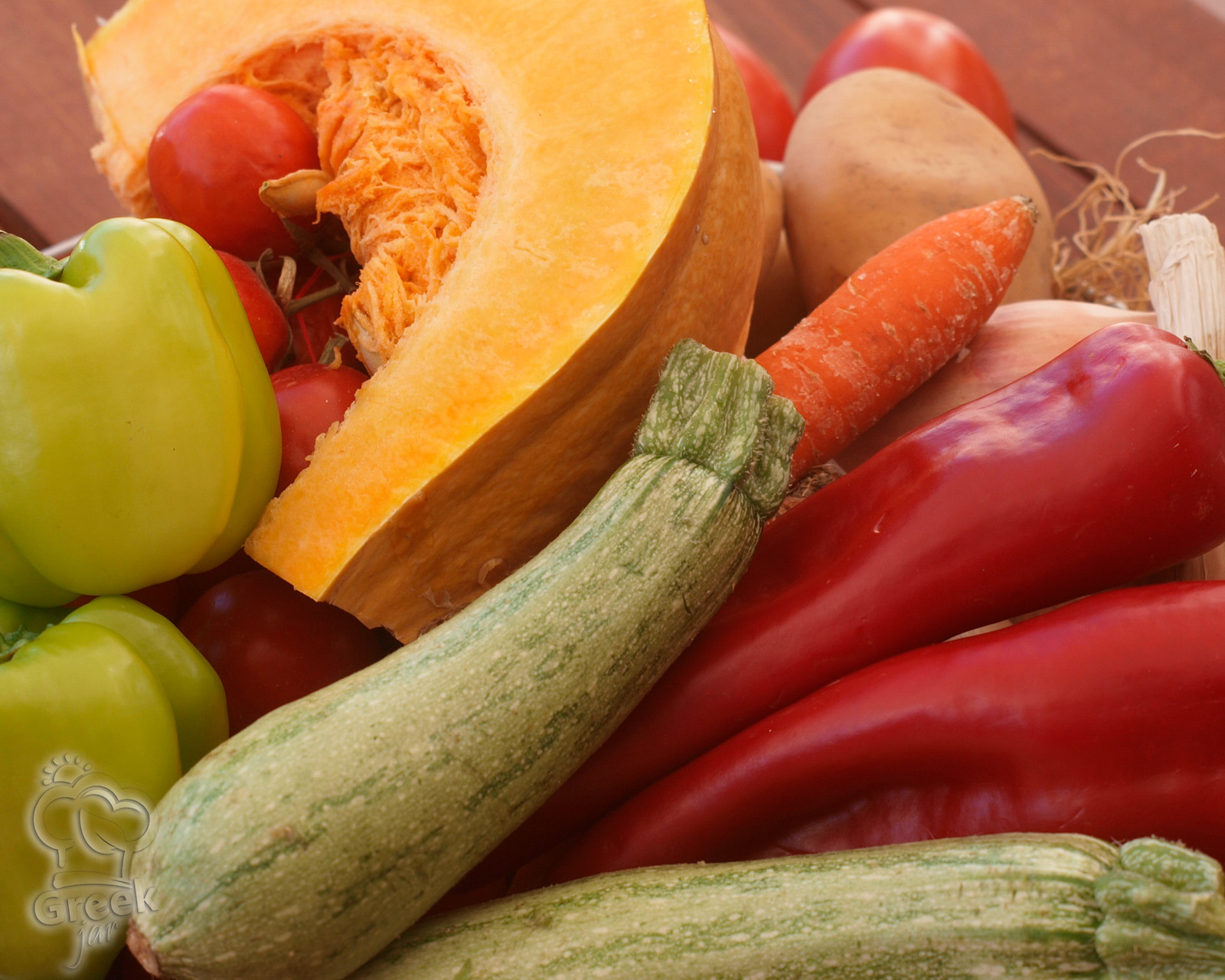
- 2 kg ripe tomatoes, to add color
- 3 Florina red peppers
- 2 green peppers
- 2 zucchini
- 3–4 carrots
- 1 slice of yellow pumpkin
- 3 medium potatoes
- 1 large sweet potato
- 300 ml olive oil
- 1.5 kg strained Greek yogurt
- 2 tbsp salt
- Approximately 5 kg flour in total; the exact amount will depend on the moisture released by the vegetables
(2.5 kg all-purpose flour, 2 kg traditional rustic flour, 500 g fine semolina)
The vegetables can be adjusted according to the season and personal preference. After all, that is part of the beauty of homemade trahanas: every household has its own way of making it.
How to
- Wash the trahanóchorto thoroughly and place it at the bottom of a large pot. Add the coarsely chopped vegetables on top, along with about one glass of water. There is no need for more, as the vegetables themselves will release plenty of liquid as they cook. Add the olive oil as well.
- Cook over medium heat until the vegetables are very soft. Remove from the heat and allow the mixture to cool.
- We drain the vegetables and purée them in a blender. Keep the liquid aside, as we may need it later.
- To the thick mixture, add the trahanóchorto flowers, after removing them from their stems. Add the salt and yogurt and mix well.
- Gradually begin adding the flours and semolina, kneading until you have a fairly firm dough.
- If we want to make a larger quantity, we can add some of the vegetable liquid that we set aside. In this case, we also increase the amount of yogurt and flour accordingly.
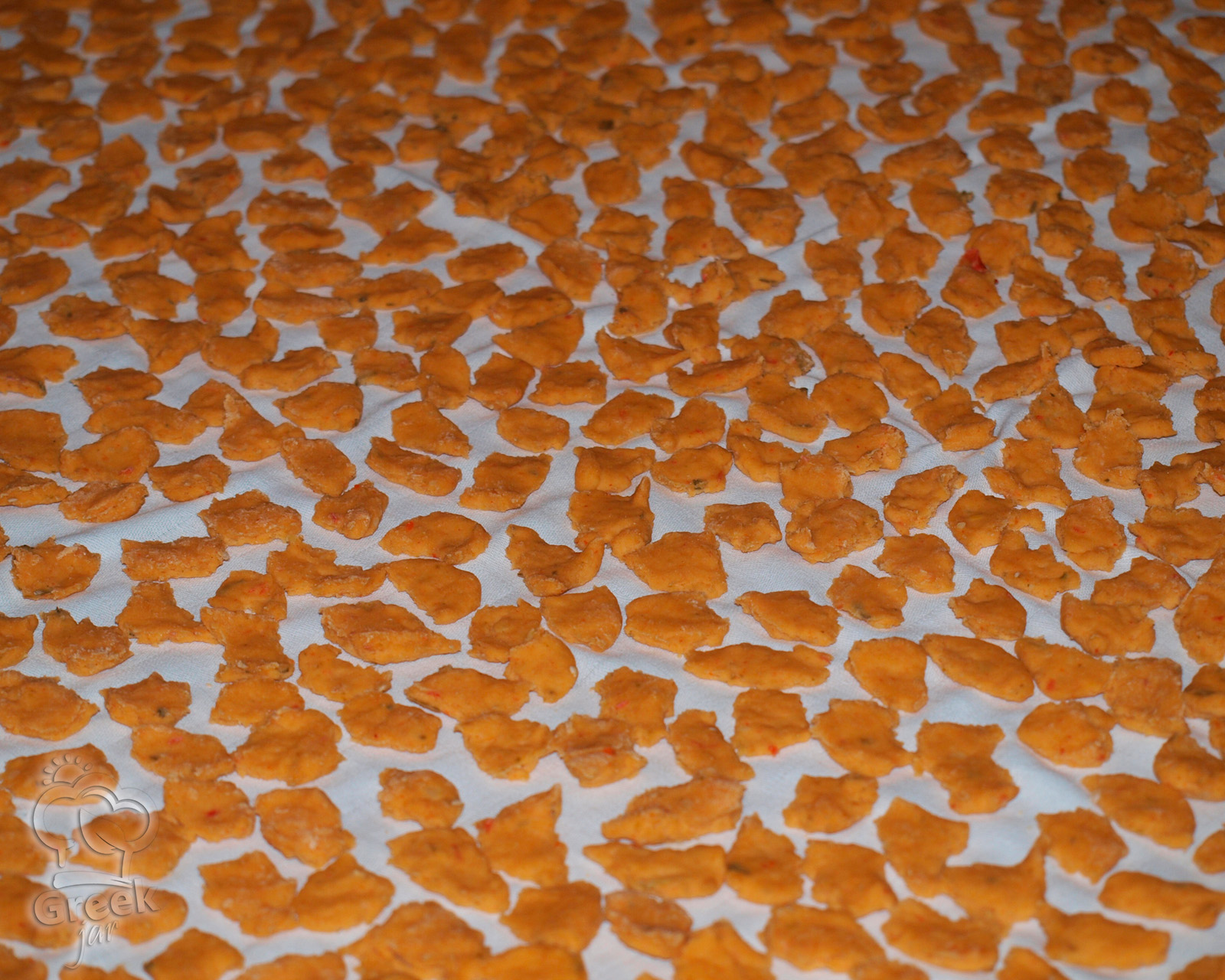
- Once the dough is ready, cover clean surfaces with cotton tablecloths. First divide the dough into large pieces and then into much smaller ones. Leave them to dry, but not until they become completely dry.
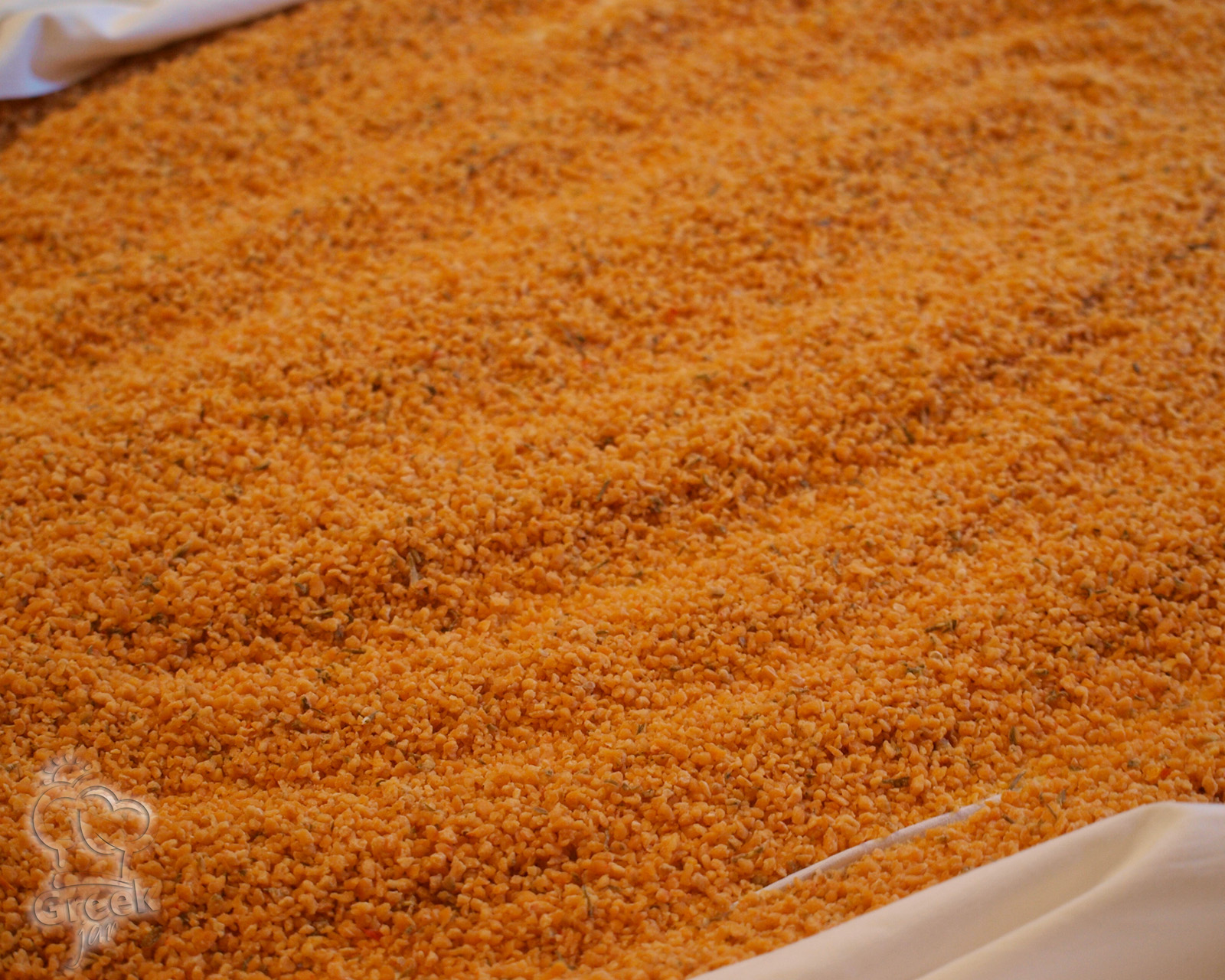
- Next, we process the pieces in small batches in a blender until they take on the characteristic texture of trahanas. We then spread it out and leave it to dry thoroughly, stirring it occasionally with a wooden spoon. In the past, and even today in many homes, trahanas is rubbed through a sieve, following the traditional method.
- Trahanas usually needs 2–4 days to dry, depending on the weather. However, there is a rule that older generations know well: trahanas is made with a northerly wind. The dry air helps it dry properly and preserves it better.
- Once it has dried sufficiently, place it in the oven at 150°C (302°F), using the fan setting, for about 30 minutes. Stir it frequently so that it dries evenly and does not become toasted.
- Allow it to cool completely and then store it in airtight containers, preferably glass ones, or in clean cotton bags.
Note from Greek jar:
When storing trahanas a few peppercorns can also be added, as they help preserve the trahanas. However, since they are not easy to remove before cooking, it is preferable to use them only if we know that they will not be an inconvenience in the dish.